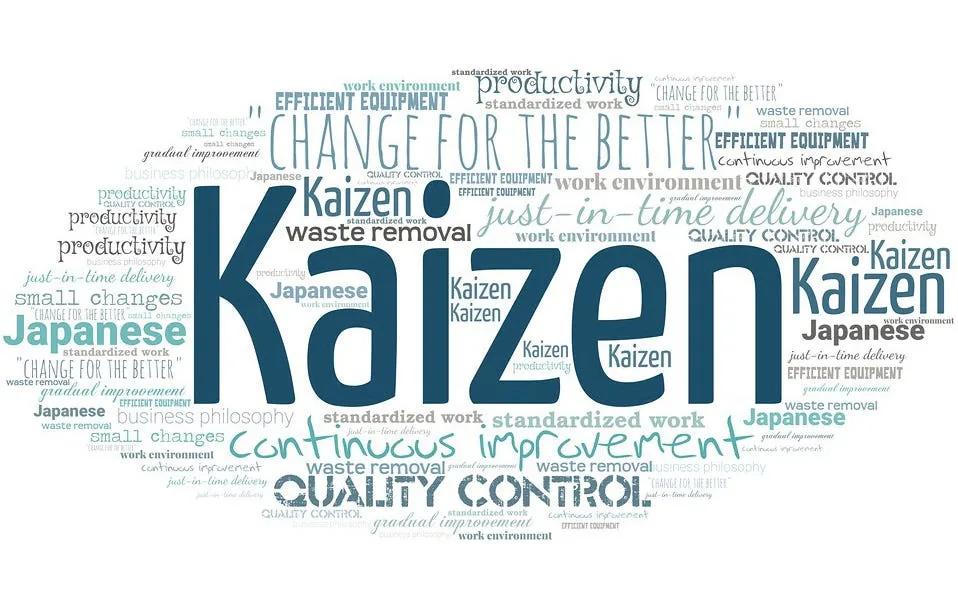
Today I want to tell you about a Japanese philosophy that's popular in Japan and that can genuinely become part of your life too: Kaizen.

What is Kaizen?
Literally, Kaizen comes from the Japanese words "Kai", meaning "change," and "Zen", meaning "better." It's about continuous improvement, growth, and stability. All the little ideas we have around us about getting better and improving things really fall under the Kaizen umbrella.
The core principle behind Kaizen is "good is the enemy of best... but chasing perfection is the enemy of progress." Masaaki Imai is known as the person who put this philosophy into words.
The basic goal is to be a little better than yesterday, every single day. In the Kaizen approach, doing something — even something small — beats doing nothing at all. Kaizen wants you to arrive at excellence slowly, step by step. The real goal here is being able to change continuously and steadily.
How was it discovered?
American business and quality management experts who visited Toyota's production plants in Japan discovered a deeply humane philosophy driving the manufacturer's innovation. It was built on motivating employees, simplifying workflows, making procedures functional, and streamlining processes.
Toyota embraced its employees' mistakes and treated them as teaching moments. It encouraged workers to suggest ways to improve efficiency to management — and if someone had a suggestion, they could even stop the production line to raise it.
The American experts realized that a purely mechanized, production-obsessed approach went against human nature — and it was the Japanese who taught them that.
That philosophy was Kaizen.
What Are the Principles of the Kaizen Philosophy?
- Acknowledge that the problem exists!
- Identify your priority. Think in terms of principles like quality and cost!
- Fix a mistake the moment you spot it!
- Don't chase perfection in the short term!
- Move toward big goals in small steps!
- Plan ahead of every single step!
- Don't move to the next step until you've confirmed you got the result you wanted!
- See every problem as an opportunity!
- Break away from rigid, traditional thinking!
- Think about how it can be done, not why it can't!
- Use the right tools for the job!
- Move forward with a "we" mindset!
- Follow the PDCA cycle! (Plan, Do, Check, Act)
How Can We Apply the Kaizen Philosophy to Our Lives?
My friends, Kaizen is an alternative to the sense of defeat and failure we so often feel after setting overly ambitious decisions or goals. Its whole purpose is to get you moving, gradually.
Let's ask ourselves this question:
What's the smallest thing I can start doing that will actually improve my life?
Want to lose weight?
Cut one slice of bread a day. Start small and build up gradually. It's not about starving yourself all at once — it's about shrinking your portions bit by bit.
Want to exercise?
Do one sit-up when you wake up. The next morning, do two. Within a year, you'll find yourself doing 60 sit-ups every single morning.
Want to read more?
Read one page every night, 10 minutes before you sleep. The next night, read two pages. Keep this routine going, and within a month you'll be amazed at how many pages you've gotten through.
Want to keep a journal?
Instead of writing pages every day, write two lines. Add one more line the next day. By the end of the month, you'll look back and realize you've filled pages of your journal.
Start small and increase gradually. Resist the urge to rush, and start taking bigger steps as you go. Stay slow, steady, and consistent.
Why Does the PDCA Cycle Matter?
The Kaizen philosophy tries to operate according to the PDCA cycle. It's how you carry out improvement efforts, check the results, and make sure that progress actually sticks. It has four steps.
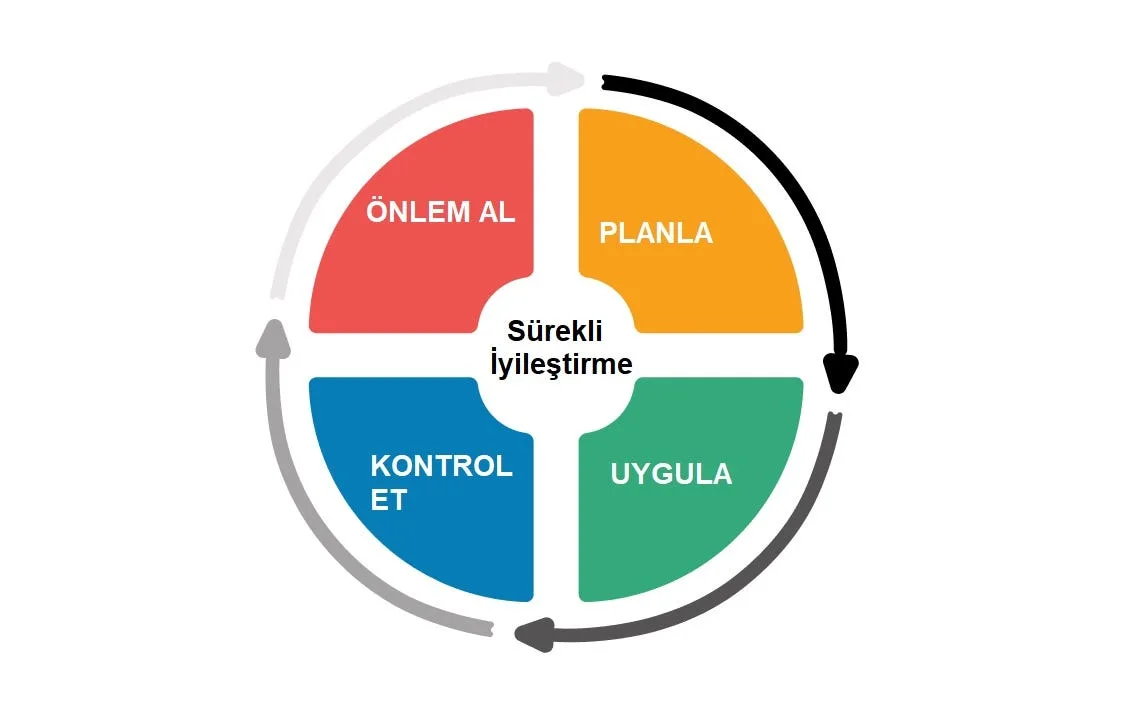
Plan: This is where goals, plans, and teams get defined. When setting goals, favor small goals over big ones. You notice a problem, analyze the current situation, and gather the data you need for an improvement plan.
Do: This is where the goals and plans from the first step actually get put into practice. Sticking closely to the plan you set at the start is essential here.
Check: At this stage, you compare your goals against what actually happened. This is where you verify whether you reached the target or not.
Act: This step makes sure your improvement efforts are permanent, not temporary. You set up checkpoints to keep the improvement going. If it holds, you standardize it; if there are deviations, you dig into why and work to eliminate them.
Just try to be 1% better than yesterday.
— Change is possible.
— You can pull off the hard stuff; the impossible just takes a little more time.
— Drop by drop, a lake is formed!
Grateful that you read this. Take care, friends...