AI's need to interact with the outside world has been one of the biggest technological challenges of our time. That is, until the Model Context Protocol (MCP) came along. MCP doesn't just let smart systems "think" — it lets them "connect" to the outside world and "take action." With this new communication language, Skynet takes one step closer to reality 🤖
Our Smart, But Slightly "Naive" Friends
Let's imagine this first: we have a robot that's incredibly powerful, one that can read through encyclopedias in seconds and run the most complex calculations. But tell it "I'm a bit tired" and it hands you back the biochemical definition of fatigue. Or say "This room feels stuffy" and it tells you the humidity reading from the nearest weather station.
Sound familiar? That's exactly what today's AI is like sometimes. Incredibly capable, but lacking that human quality of "understanding" — that is, context. They struggle to sense the intent behind what we say, the situation we're actually in, or what we really need.
So how do we teach these "smart but naive" friends of ours to become perceptive? The answer to that question, even though it sounds a bit technical, might just be hiding in a surprisingly simple idea: the Model Context Protocol (MCP).
So Who Actually Invented MCP?
If you search online, you won't find a single person or company that invented this protocol. That's because MCP isn't a piece of code someone wrote overnight — it's a conceptual framework that emerged from the collective consensus of the AI world deciding "it's about time for this."
Introducing the Model Context Protocol
It was officially announced and open-sourced by Anthropic in November 2024, and has since been adopted by major AI providers like OpenAI and Google DeepMind.
So What Exactly Is the Model Context Protocol (MCP)?
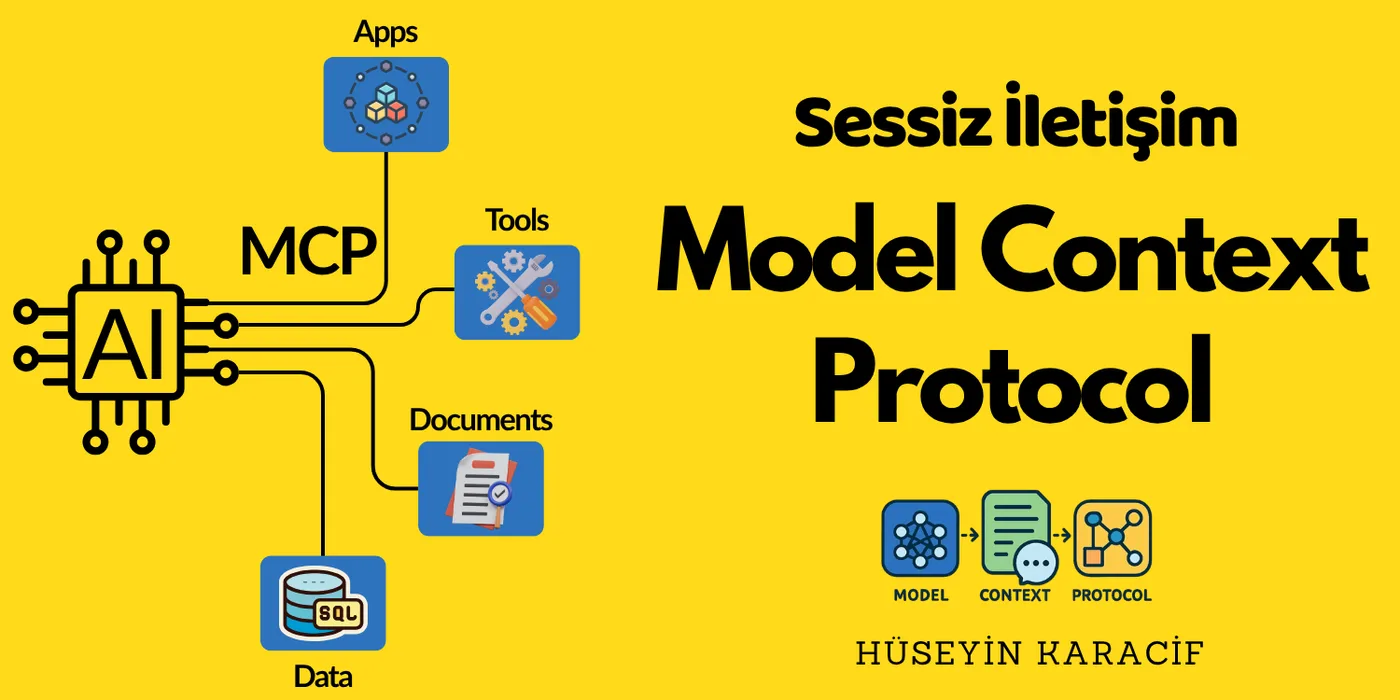
There's an analogy I kept running into while researching this. Tech writers describe it as "MCP is basically a USB-C port for AI."
Why does this analogy work so well?
- It's a standard: Just like USB-C lets you charge your phone, laptop, and headphones with the same cable, MCP aims to let AI connect to different tools (weather, smart lamps, your calendar, a database) using the same standard language. It doesn't need a separate "translator" for every single tool.
- It's bidirectional: USB-C doesn't just deliver power — it transfers data too. MCP does exactly the same thing. It doesn't just send commands; it also receives information (that is, context) coming back from the outside world and its tools.
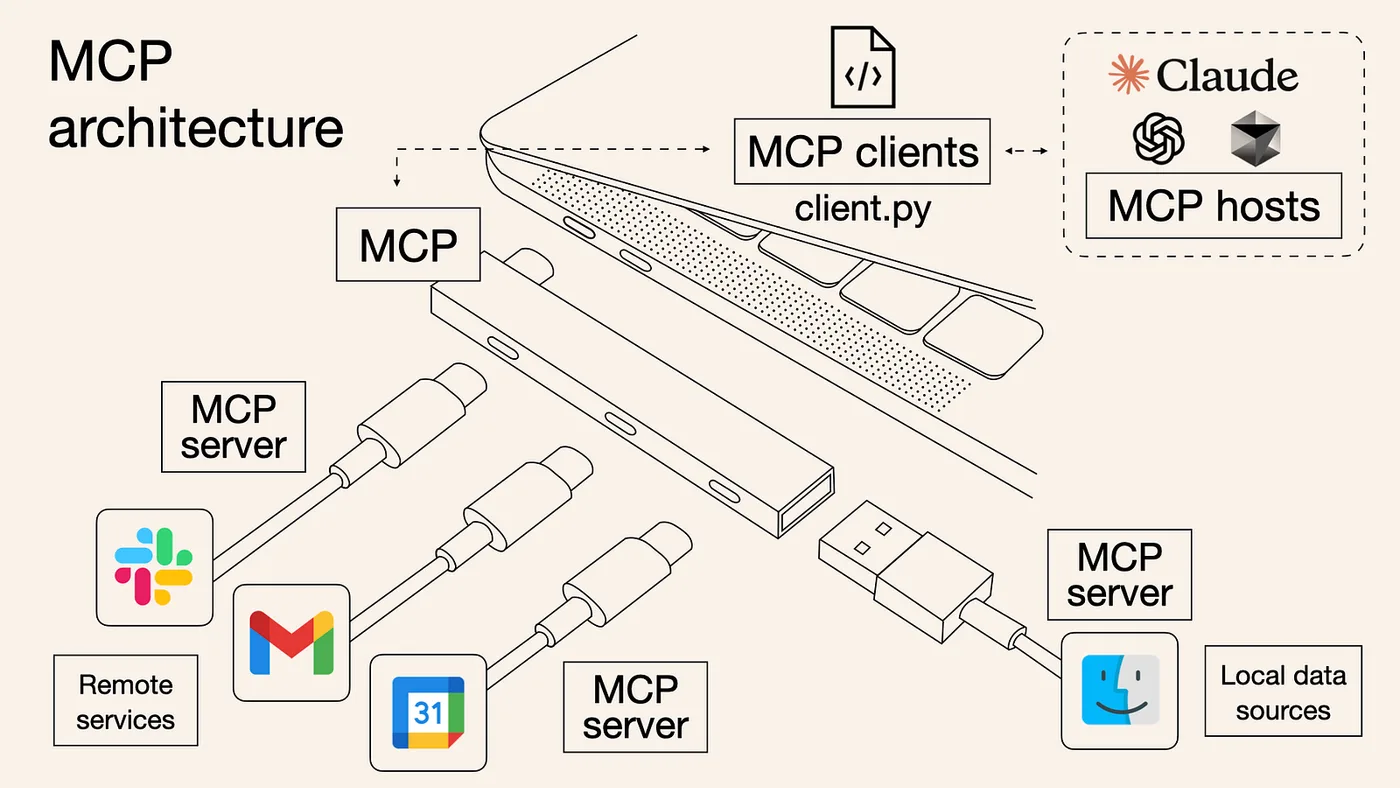 MCP looks likes USB-C but for AI applications by Norah Sakal
But I want to take this analogy one step further: MCP isn't just the "input port" itself — it's also the smart cable plugged into that port. This cable whispers what the data flowing through it actually is, why it was sent, and how important it is.
Let's Bring It to Life With an Example: "It's Gotten Dark"
The user — me: (yawning) "Ugh, it's gotten dark out."
A World Without MCP (a mute nature): The smart assistant hears this and treats it as a simple observation: "Understood. It's dark out." "Let me tell the user what time the sun sets." The result? A response the user never wanted and that's completely useless.
A World With MCP (proactive intelligence): The moment the assistant hears this sentence, MCP kicks in and puts together a "gossip packet":
Incoming Context (What's Going On?): The smart speaker practically whispers to the central AI: "Hey boss, this is the speaker in the living room. Hüseyin's here, and it's after 9pm — he's aware of the time. The room's light sensor is flashing a 'pitch black' alert. The motion sensor on Hüseyin's phone has been inactive for the last 10 minutes, meaning he's not fiddling with it. He's probably tired and wants to unwind. He also just said 'it's gotten dark.' That's not a question — I think it's a hint!"
Outgoing Context (What Should Happen Now?): The moment the central AI receives this rich gossip packet, it understands the situation. It figures out the intent is "turn the lights on." But which lights? This is where MCP's "USB-C" side kicks in. The AI connects, through MCP, to the tools it has on hand (smart lamps, the music system, etc.):
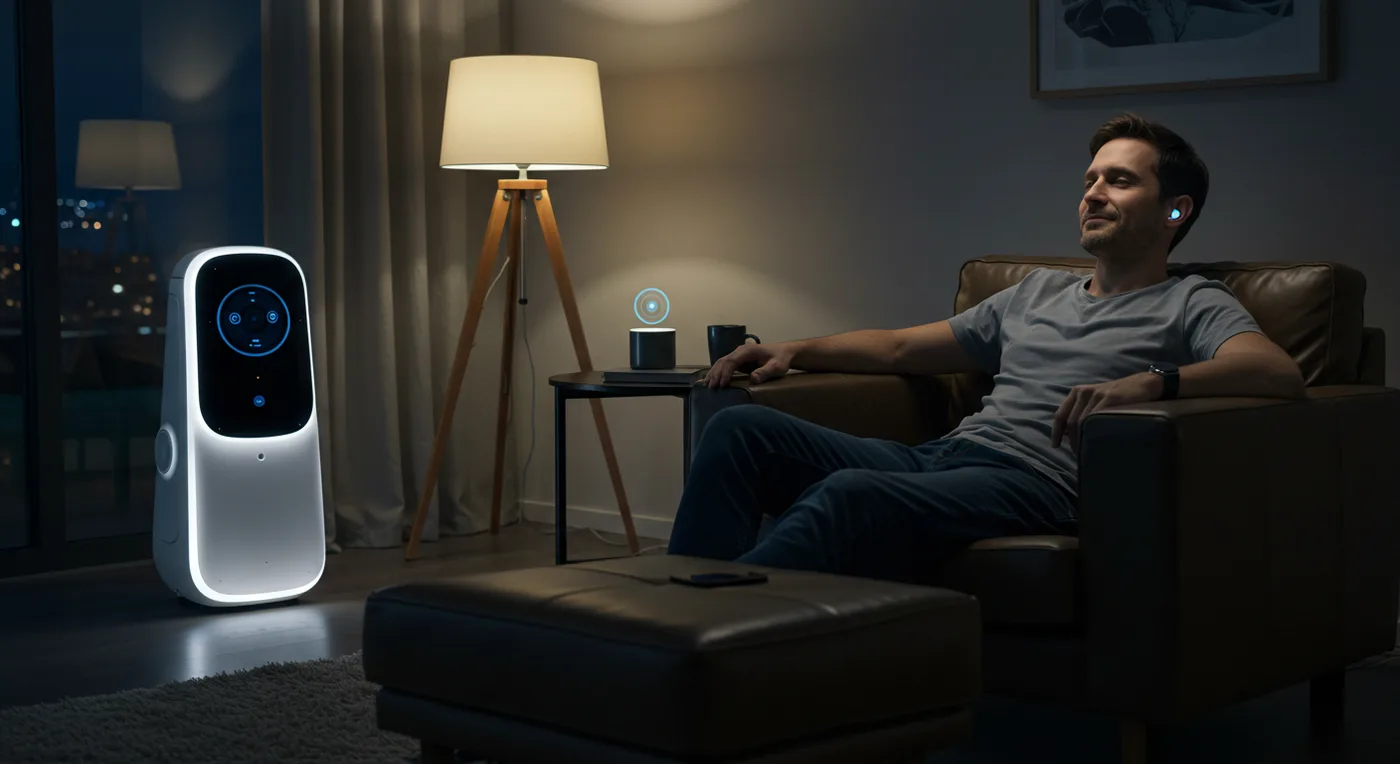 Created with ImageFX by Labs.Google
- "Hey Philips Hue API*, Hüseyin has a scene called* 'Evening Mood'**. Mind running it? Set the living room lamp to 50% warm yellow.**"
- "Hi Spotify API*, could you play Hüseyin's* 'Calm Evenings' playlist at a really low volume?"
The Final Result: The AI speaks up to the user: "You're right, Hüseyin, it's gotten dark out. I've switched on evening mode for you. Rest well."
See what happened? MCP took what was a simple command-response loop and turned it into an experience that understands, empathizes, and acts proactively.
What Does This Mean for Us?
If an approach like MCP becomes widespread, it's going to fundamentally change the technology in our lives — picture it exactly the way I describe it: like having a helper that's an octopus, one that finishes your sentences before you do 😅
- A Genuinely "Smart" Home: Your home turns on the heater based on temperature sensor readings before you even say "I'm cold." It picks up on light sensors and adjusts to the optimal lighting on its own. It's constantly alive, constantly engaged.
- A Better Colleague: Your AI assistant doesn't just tell you "you have a meeting at 5." It says, "I've blocked off 30 minutes before your 5pm meeting so you can read the relevant reports — want me to order you a coffee too?"
- Safer Systems: An autonomous vehicle doesn't just see the obstacle ahead of it — thanks to MCP, it also knows it's in a "school zone," that it's "dismissal time," and that "light drizzle has just started," letting it make a far safer decision.
Final Word
The Model Context Protocol (MCP) makes AI more interactive and aware by giving it access to environmental context. By pulling together information from different sources (email, calendar, files, etc.), it lets AI systems engage with users on a more meaningful, personal level. Thanks to MCP, AI no longer just speaks in data — it speaks in context too — which turns it from something that merely answers into something that truly understands.
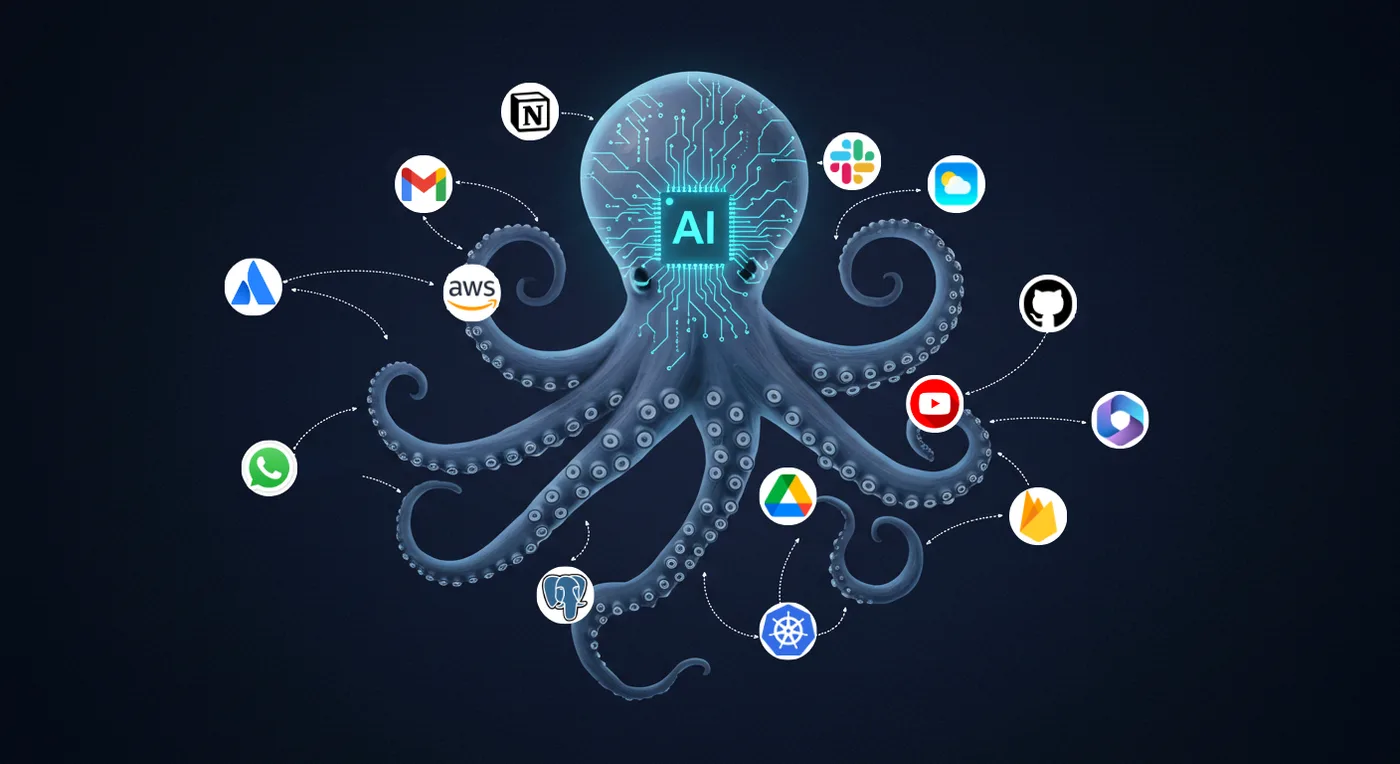 Model Context Protocol, as I call it, is the arms of the octopus called Artificial Intelligence. (Hüseyin Karacif)
To me, MCP is the arms of that octopus we call Artificial Intelligence. — Hüseyin Karacif
Grateful that you read this.
Take care, friends...
Sources;
Introducing the MCP by Anthropic
MCP vs API Protocols by Norah Sakal
Model Context Protocol 101 Dev.to